Revolving Credit vs Personal Loans: Understanding the Difference

July 21, 2026

Not all borrowing works the same way. Whether you are covering an unexpected expense or managing a temporary financial gap, understanding the differences between revolving credit and a personal loan can help you make more informed financial decisions.


While every person’s financial situation is unique, revolving credit can become difficult to manage if balances continue to grow over time. In some situations, a small personal installment loan with predictable payments may provide a more structured approach to borrowing.

Hand tapping a credit card on a payment terminal at a checkout counter

What Is Revolving Credit?

Revolving credit allows you to borrow up to a predetermined credit limit, repay some or all of the balance, and borrow again as needed. Credit cards are the most common example.


This flexibility can be convenient for everyday purchases or emergencies. However, because revolving credit is always available, it can also make it easier to carry balances from month to month if spending exceeds your ability to repay the debt.


Over time, this can lead to larger outstanding balances and additional interest costs.
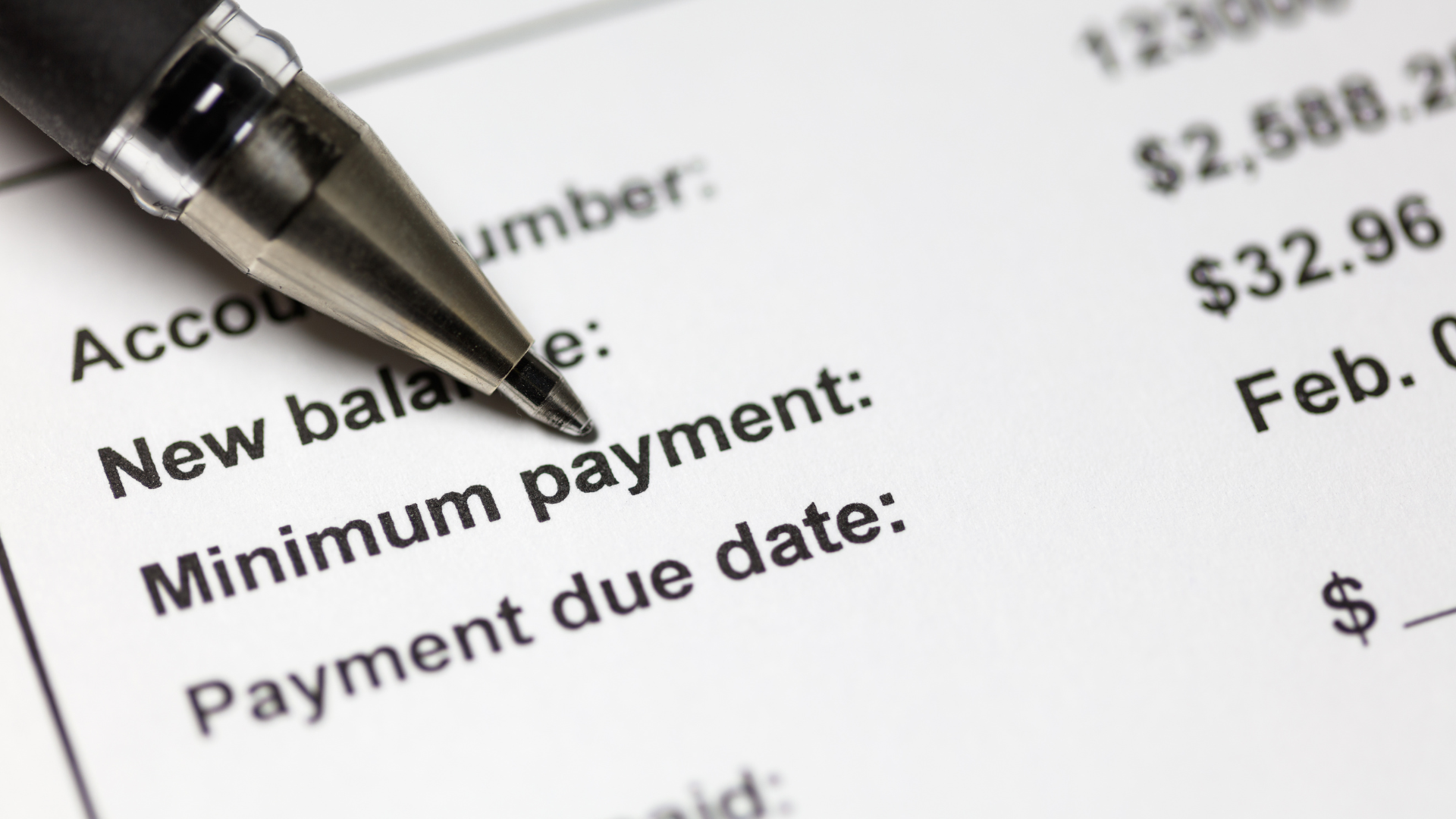
Pen on an account statement highlighting minimum payment and payment due date

The Challenges of Carrying Credit Card Balances

One of the biggest risks associated with revolving credit is making only the minimum required payment.


When only minimum payments are made, a larger portion of each payment may go toward interest rather than reducing the principal balance. Depending on the balance, interest rate, and payment amount, it may take significantly longer to repay the debt than many borrowers expect.


In addition, continuing to make new purchases while carrying an existing balance can make it more difficult to reduce overall debt.

Hand holding pen beside calculator, spiral notebook, and $100 bill on a white desk

The Benefits of Predictable Payments

Unlike revolving credit, most personal installment loans are repaid through fixed monthly payments over a set repayment period.


Because the payment amount and repayment schedule are established at the beginning of the loan, borrowers know how much they owe each month and when the loan is expected to be paid in full, provided payments are made as agreed.


For many people, this structure can make budgeting easier because there are fewer surprises from month to month.

Notebook on orange desk with white chalk-style “intelligent law” text, pen, binder clip, and sticky note.

A More Disciplined Borrowing Approach

A small personal loan may also encourage more intentional borrowing.


Instead of having an open credit line that can continually be reused, an installment loan is typically designed to meet a specific financial need. Once the funds are received, the focus shifts toward repayment rather than continued borrowing.


This structure can help some borrowers stay focused on paying off their obligation instead of carrying debt indefinitely.

Person holding open brown wallet and counting cash inside.

Borrow Only What You Need

Regardless of the type of financing you choose, responsible borrowing begins with borrowing only what is necessary.


Before applying for any loan, consider:

  • Whether the expense is necessary.
  • Whether the monthly payment comfortably fits your budget.
  • How the loan fits into your overall financial goals.
  • Whether you have a plan to repay the debt on time.


Borrowing should be viewed as a financial tool rather than a long-term solution to ongoing budgeting challenges.

Person using a smartphone beside a laptop, notebook, cash, and coffee on a wooden desk

Financial Planning Still Comes First

Even when a personal loan is appropriate, maintaining healthy financial habits remains essential.


Creating a realistic monthly budget, building an emergency savings fund whenever possible, and reviewing your spending regularly can help reduce the need to borrow in the future. Financial flexibility often comes from consistent planning rather than relying on available credit.


When unexpected expenses do arise, having a repayment strategy before accepting new debt can make the experience much less stressful.

Two people smiling and talking in a modern office, with papers and a laptop on the table.

Finding the Right Solution With Portside Finance

Every financial situation is different, and there is no one-size-fits-all borrowing solution. Revolving credit can serve an important purpose in some circumstances, while a small personal installment loan may be a better fit for others who value predictable payments and a defined repayment schedule.


At Portside Finance, we believe responsible lending starts with helping customers understand their options. Our personal installment loans are designed to provide straightforward borrowing with fixed payments and clear repayment terms, making it easier to plan your budget and work toward becoming debt-free. We encourage every customer to borrow responsibly, choose financing that fits their financial circumstances, and view borrowing as one part of a broader plan for long-term financial wellness.


If you are facing an unexpected expense and would like to learn more about whether a personal installment loan may be right for you, contact Portside Finance today. Our team is committed to helping you make informed financial decisions with confidence.


August 18, 2026
A credit report is a detailed record of how you have managed certain types of credit and debt. Lenders, landlords, insurers, and other organizations may use information from your credit report when making decisions about applications, rates, deposits, or other financial matters.  Understanding what appears on your credit report can make it easier to monitor your financial history, identify errors, and build stronger credit habits. Portside Finance encourages consumers to review their credit information regularly and understand how everyday borrowing and payment decisions may affect their financial profile.
August 11, 2026
Even a carefully planned budget can get off track. An unexpected car repair, a higher utility bill, a family obligation, or simply a month with more discretionary spending than usual can push expenses beyond the amount originally planned. Going over budget does not mean the entire financial plan has failed. What matters most is how quickly the situation is reviewed and adjusted.  Recovering from an over-budget month starts with understanding what happened, identifying which expenses can be changed, and creating a practical plan for the weeks ahead. Portside Finance encourages consumers to approach short-term financial setbacks with organization, realistic expectations, and responsible decision-making rather than panic.
August 4, 2026
Strong money management is not about earning a certain income or having extensive financial experience. It is about developing habits that help you make informed decisions, prepare for unexpected expenses, and work toward your financial goals with confidence. Whether you are just beginning your financial journey or looking to strengthen your current routine, improving your money management skills can provide long-term benefits.  Every financial situation is unique, but a few practical strategies can help almost anyone build a stronger financial foundation. Portside Finance encourages responsible financial planning and believes that informed decisions today can support greater financial stability tomorrow.
July 28, 2026
Unexpected expenses are a part of life. A vehicle may require an expensive repair, a home appliance may stop working without warning, or an unforeseen medical expense could suddenly affect your monthly budget. While it is impossible to predict when these situations will arise, preparing for them financially can help reduce stress and make it easier to move forward with confidence.  One of the most effective ways to prepare for life’s surprises is by building an emergency fund . Even modest savings set aside over time can provide valuable financial flexibility when unexpected costs occur.
July 14, 2026
Your credit score is one of the most important numbers in your financial life. It can affect your ability to qualify for loans, rent a home, secure favorable interest rates, and even influence certain employment or insurance decisions. While many people know that paying bills on time is important, fewer understand the full range of factors that contribute to a healthy credit profile.  Learning how credit scores work can help you make informed financial decisions and develop habits that support long-term financial wellness.
July 7, 2026
No matter how carefully you plan, life has a way of introducing unexpected expenses. A vehicle may need repairs, a household appliance may stop working, or an unplanned medical bill may arrive at an inconvenient time. While it is impossible to predict every financial challenge, it is possible to build a budget that is flexible enough to handle many of life’s surprises.  A well-designed budget is not meant to be rigid. Instead, it should provide structure while allowing room to adjust as circumstances change. The more adaptable your budget becomes, the better prepared you may be to navigate unexpected expenses without disrupting your long-term financial goals.
June 30, 2026
Many people think of personal loans as tools for handling unexpected expenses or consolidating debt. However, some borrowers also wonder whether taking out a small personal loan can help build or strengthen their credit history.  The answer is that it can—but only under the right circumstances. A personal loan is not a shortcut to a higher credit score, nor is it appropriate for everyone. Like any financial product, it should be used thoughtfully and only when it fits within a broader financial plan. Understanding both the potential benefits and the risks can help borrowers make informed decisions.
June 24, 2026
Most people are familiar with the idea of budgeting for predictable monthly costs. Rent or mortgage payments, utilities, groceries, insurance, and transportation expenses often follow relatively consistent patterns. The challenge arises when life introduces expenses that are difficult to anticipate.  Vehicle repairs, medical bills, home maintenance issues, emergency travel, and other unexpected costs can quickly disrupt even the most carefully prepared budget. While it may not be possible to predict exactly when these expenses will occur, it is possible to create a spending plan that helps prepare for them. A flexible financial plan can make unexpected expenses feel more manageable and reduce the stress that often accompanies financial surprises.
 applying for a quick loan with bad credit
June 17, 2026
Need a quick loan with bad credit in Florida? Explore same day approval loans and get fast cash today. Learn more about your options.
June 16, 2026
Many people approach personal finance with the idea that success means never making mistakes, never facing unexpected expenses, and always sticking perfectly to a budget. While those goals may sound appealing, real life rarely works that way.  Unexpected car repairs happen. Medical bills appear without warning. Household expenses fluctuate. Employment situations change. Even the most carefully planned budget can be disrupted by circumstances beyond a person’s control. For this reason, financial flexibility is often more valuable than financial perfection. The ability to adapt, adjust, and respond to changing circumstances can play a major role in long-term financial stability .
More Posts