How to Choose Which Debt to Pay Down First
When you have several debts at the same time, deciding where to focus can feel overwhelming. Credit cards, installment loans, medical balances, auto loans, and other obligations may all have different interest rates, minimum payments, and payoff timelines.
There is no single payoff strategy that is right for everyone. The best approach depends on your
budget, interest costs, motivation, and need for financial flexibility. What matters most is choosing a method you can maintain consistently.

Start by Listing Every Debt
Before deciding which balance to attack first, create a complete list.
Include the current balance, interest rate, minimum payment, due date, and type of debt. Seeing everything in one place can make the situation feel more manageable and reveal which accounts are costing the most.
Continue making at least the required minimum payment on every account. Missing payments while aggressively paying another balance can lead to late fees, credit damage, and additional financial pressure.
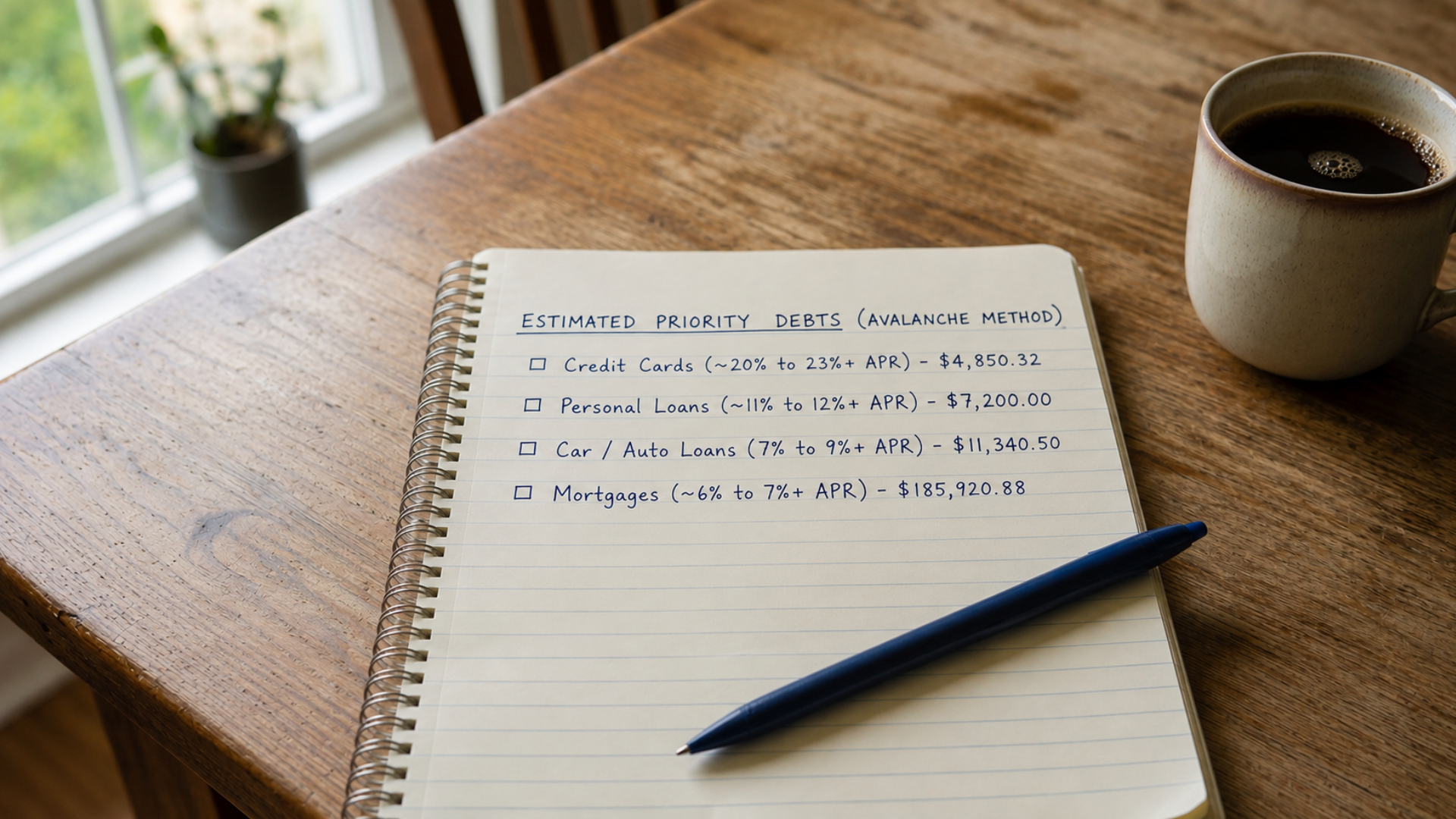
The Highest-Interest Method
One common strategy is often called the debt avalanche.
With this approach, you direct extra money toward the debt with the highest interest rate while continuing minimum payments on the others. Once that balance is eliminated, the extra payment moves to the account with the next-highest rate.
The main advantage is mathematical efficiency. Paying higher-interest debt first can reduce the amount of interest you pay over time.
This approach can work especially well when one credit card or other balance has a much higher rate than the rest.
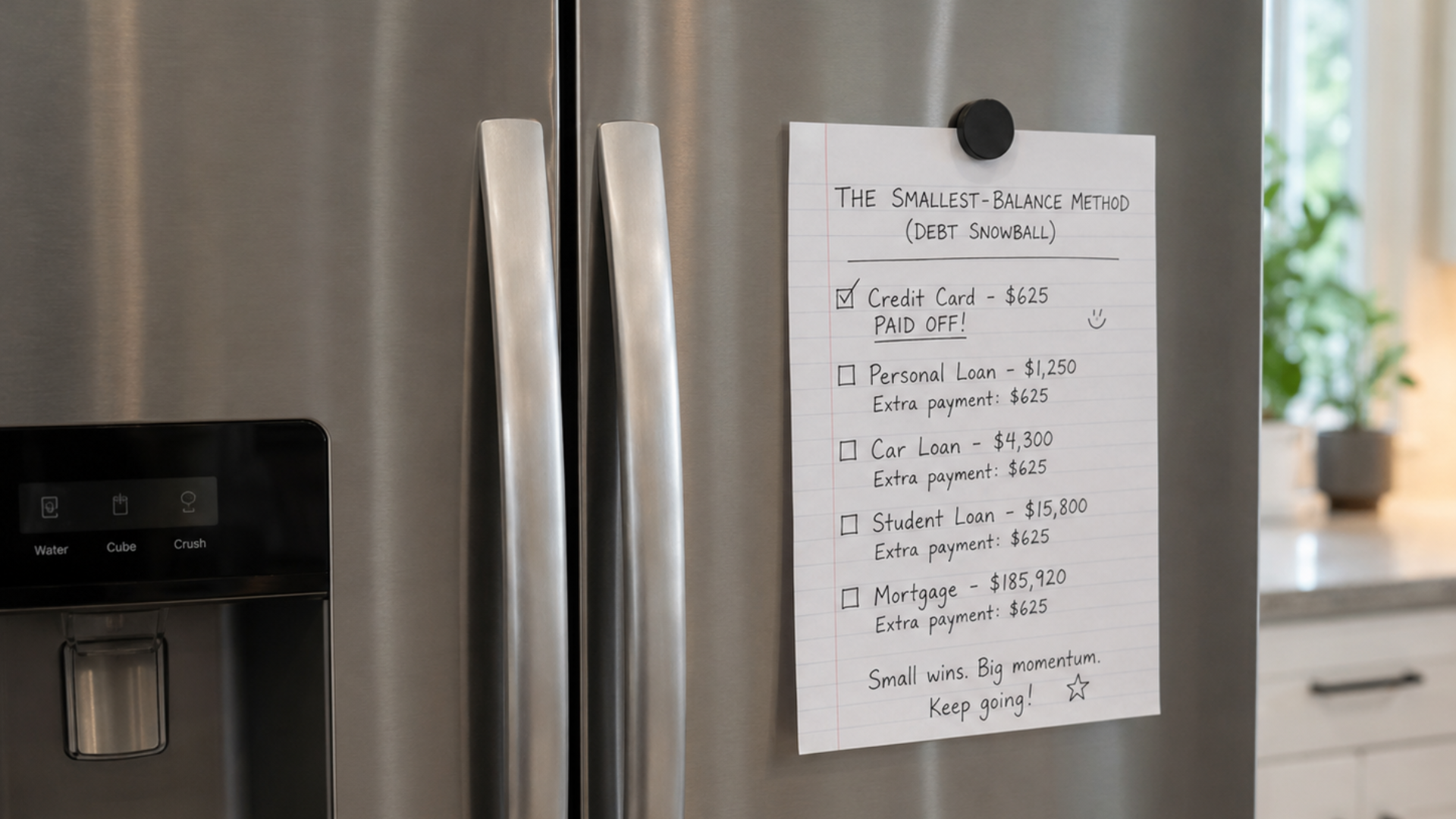
The Smallest-Balance Method
Another option is the debt snowball.
Instead of focusing on interest rates, you put extra money toward the smallest balance first. Paying off that account creates an early win and eliminates one monthly payment from your list.
You then roll that payment into the next-smallest debt.
This method may cost more in interest than prioritizing the highest-rate balance, but some people find the visible progress easier to maintain.
A mathematically perfect plan only works if you can stick with it.

Consider Monthly Cash Flow
Interest rate and balance are not the only factors worth considering.
Eliminating a debt with a relatively large monthly payment may free up valuable cash flow. That can be useful when your budget is tight and you need more breathing room each month.
For example, paying off a modest balance with a $150 monthly payment could provide more immediate flexibility than reducing a much larger balance that has a relatively small required payment.
That flexibility can then be redirected toward savings or additional debt repayment.

Keep an Emergency Cushion
Putting every available dollar toward debt can sometimes create another problem.
If you have no emergency savings and an unexpected car repair, medical expense, or home problem occurs, you may have to borrow again.
Maintaining at least a modest emergency cushion can help prevent that cycle.
Debt reduction and savings do not always need to be treated as opposing goals. In many cases, making steady debt progress while maintaining some cash reserves creates a more sustainable financial plan.
Avoid Adding New Balances
A payoff strategy becomes much harder if new debt is being added at the same time.
Review the spending patterns that contributed to revolving balances and look for opportunities to reduce unnecessary borrowing.
This does not mean eliminating every enjoyable purchase. The goal is to create enough room in the budget that debt balances move consistently downward rather than repeatedly returning to previous levels.

Reevaluate as Your Situation Changes
Your payoff priority does not have to remain the same forever.
A change in income, an unexpected expense, a new interest rate, or the elimination of one balance may change what makes the most sense.
Review your plan periodically and adjust when necessary.
The important thing is to keep moving toward lower overall debt while protecting the basic stability of your monthly budget.

Build a Strategy You Can Maintain
Choosing which debt to pay first comes down to balancing cost, motivation, and cash flow. The highest-interest method may minimize interest, while the smallest-balance method can provide faster psychological wins. In some situations, freeing up a large monthly payment may be the most useful first step.
Portside Finance provides short-term installment loan options along with financial education designed to support informed borrowing and better money management. Before taking on any new obligation, review the total cost, payment schedule, and impact on your budget. A strong debt strategy should reduce financial pressure over time rather than create more of it.