Why Different Credit Scores Can All Be Correct
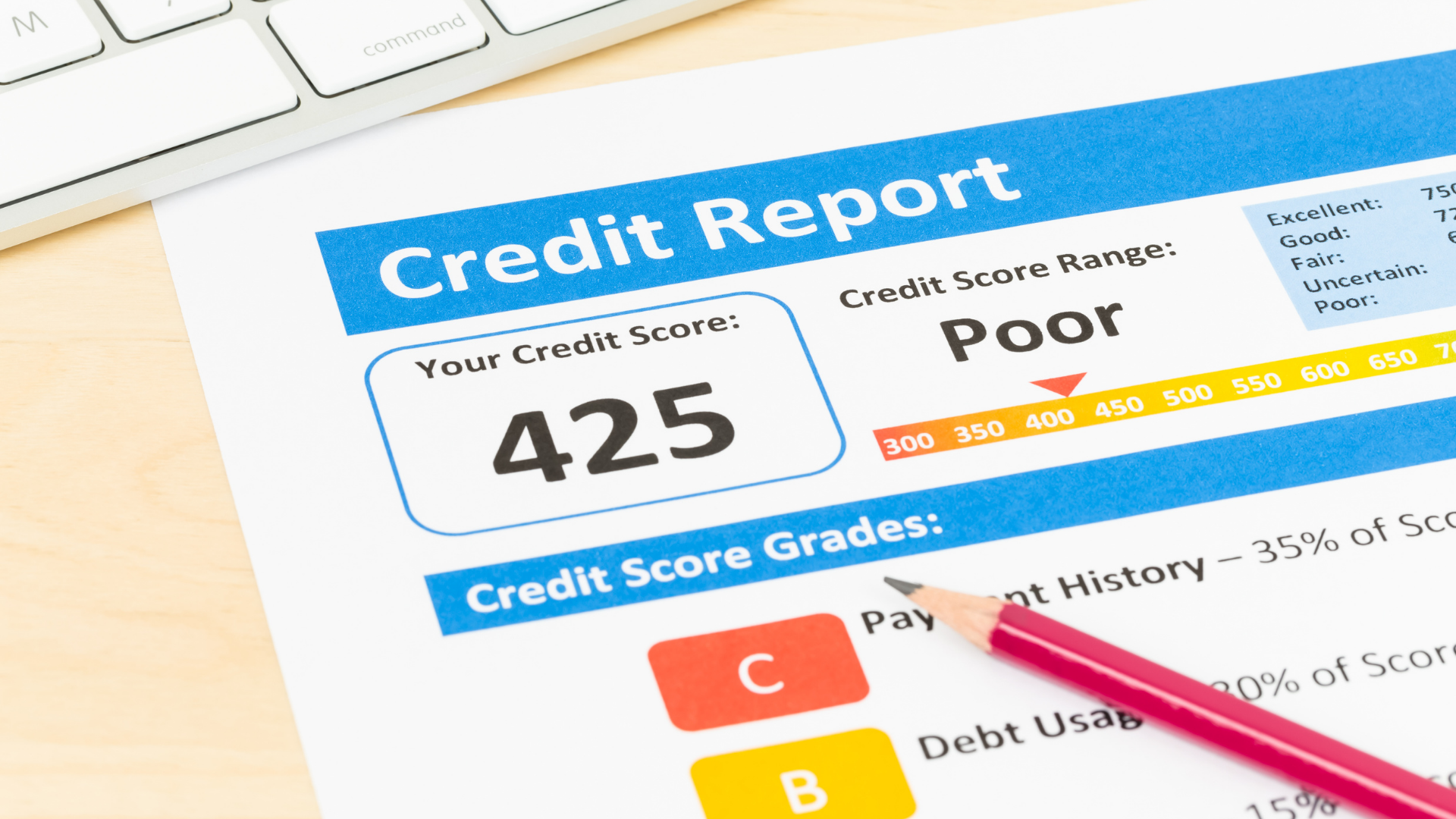
It can be confusing to check your credit score in one place, then see a different number somewhere else.
One app may show a score of 690, while a lender pulls a score that is noticeably higher or lower. That does not necessarily mean one of them is wrong.
Consumers can have multiple valid credit scores at the same time because different scoring models, credit bureaus, and reporting dates may be used.
Understanding why those differences happen can make credit monitoring less frustrating.
There Is More Than One Credit Scoring Model
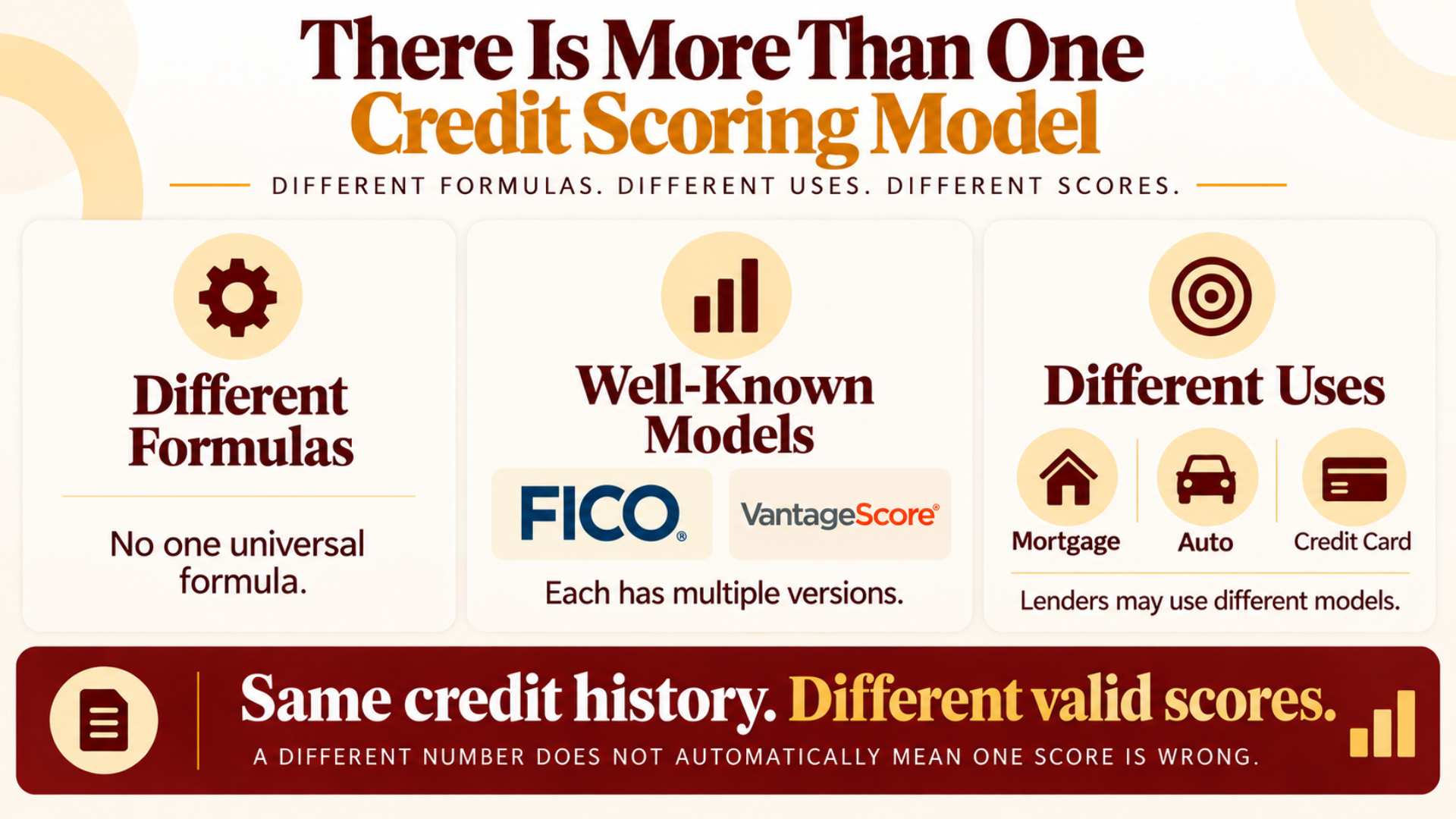
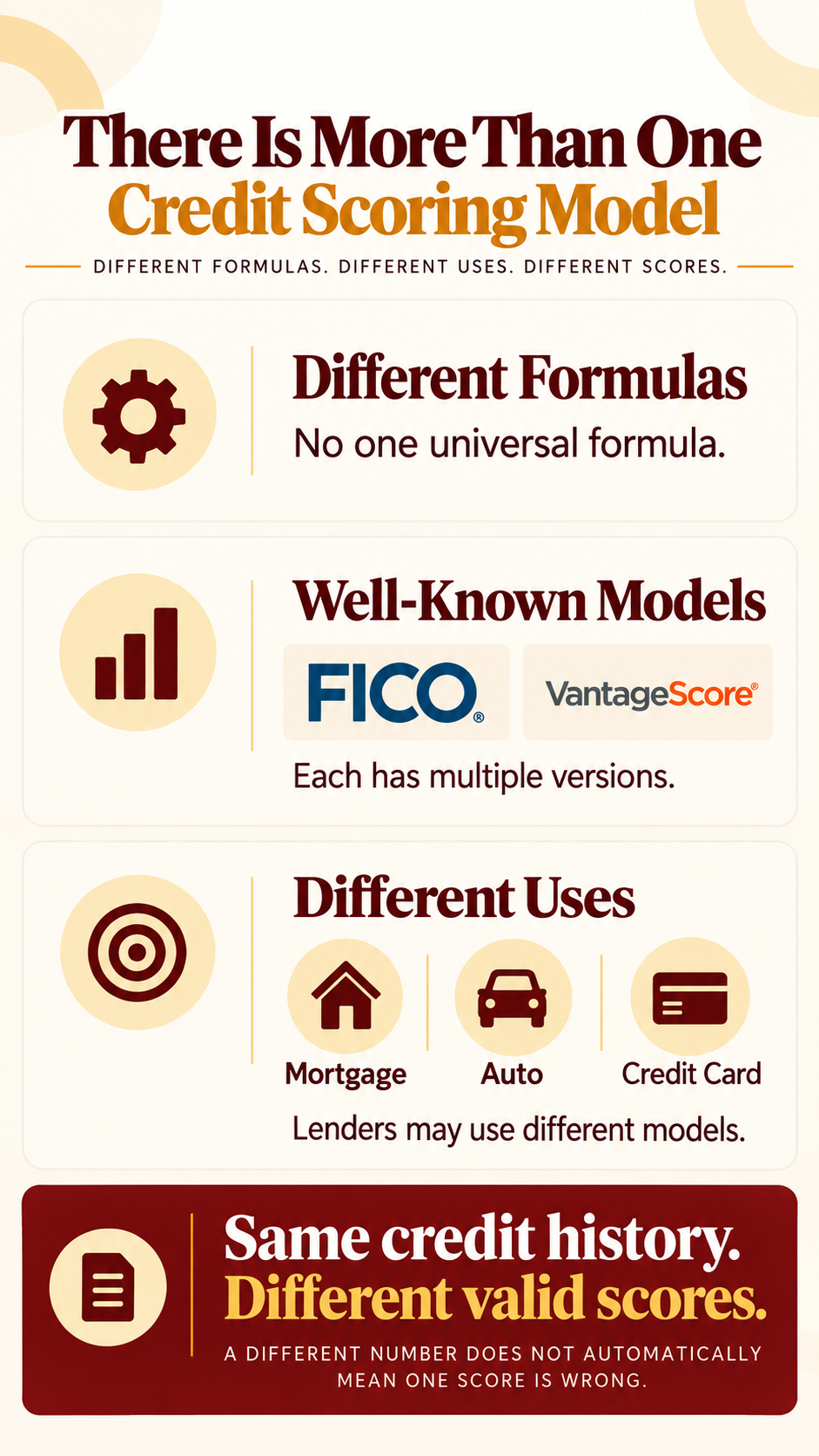
A credit score is not generated by one universal formula.
Different scoring companies use different models to estimate credit risk.
FICO and VantageScore are two of the best-known examples, and each has multiple versions.
A lender may use one model for a mortgage, another for an auto loan, and a different version for a credit card application.
That means two scores based on the same general credit history can still produce different numbers.

Credit Bureaus May Have Different Information
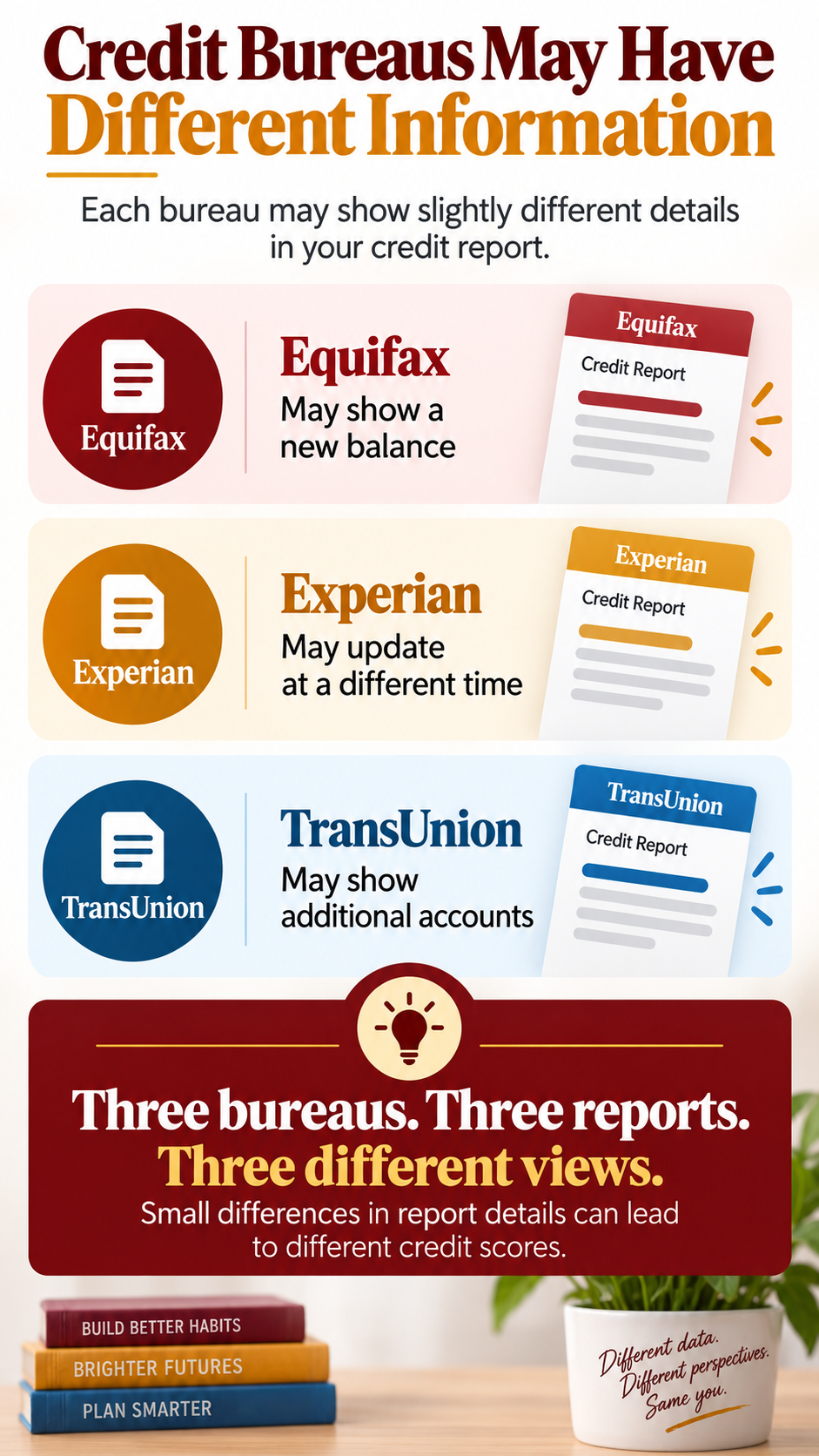
The three major credit bureaus are Equifax, Experian, and TransUnion.
Not every lender reports account information to all three bureaus, and updates do not always appear at the same time.
One bureau may show a recently updated credit card balance while another still reflects the prior month's balance.
A loan account might also appear on one report but not another.
Because scoring models depend on the data in the credit report, even small differences can affect the final score.

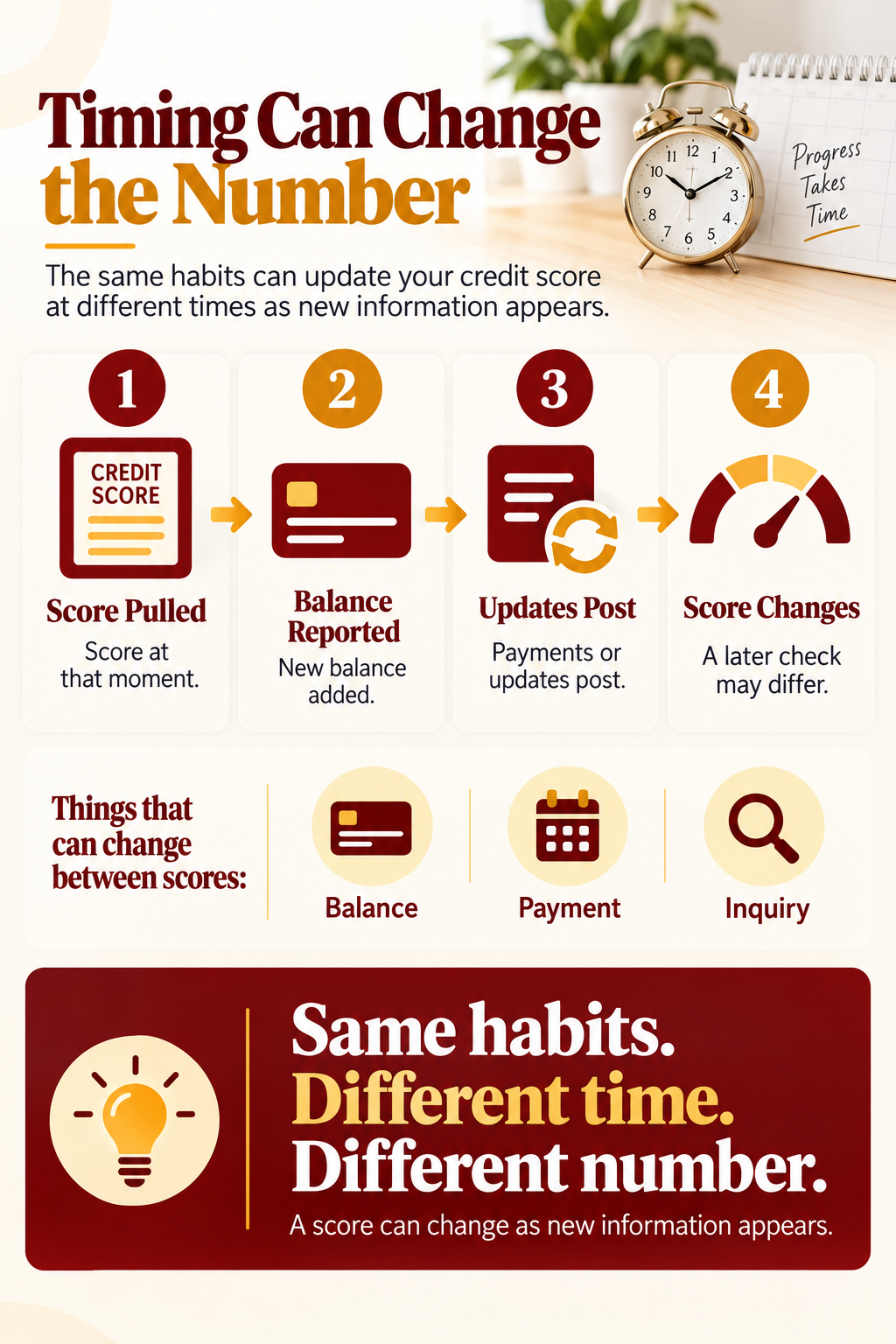
Timing Can Change the Number
Credit scores are snapshots.
They are calculated using the information available at the moment the score is generated.
If a credit card balance is reported one day and you check your score shortly afterward, the new balance may affect the result.
A score pulled later could be different if another account has updated, a payment has posted, or an inquiry has been added.
This is one reason scores can move even when your overall financial habits have not changed dramatically.

Credit Card Utilization Can Create Noticeable Swings
Credit utilization compares your reported credit card balances with your available credit limits.
If your balances are higher when they are reported, your score may temporarily be lower.
After those balances are reduced and new information is reported, the score may rise again.
This can happen even when you pay your credit card bill in full every month because the reported balance may be based on the account's statement cycle rather than the payment due date.


Lenders May Use Industry-Specific Scores
A lender may not use the same score you see in a consumer app.
Some scoring models are designed specifically for certain types of lending.
For example, auto lenders and mortgage lenders may use different versions of a scoring model that weigh parts of the credit report somewhat differently.
The score provided by a free monitoring service can still be useful for tracking general direction, but it may not match the score a lender uses in an approval decision.

Focus on the Credit Report, Not One Number
Because scores can vary, it is often more useful to focus on the information behind the score.
Review your credit reports for:
- Payment history
- Account balances
- Credit limits
- Collections
- Hard inquiries
- Incorrect or unfamiliar accounts
- Outdated information
These underlying details influence the scores generated from the report.
Correcting inaccurate information and maintaining healthy credit habits can matter more over time than tracking small score changes from day to day.
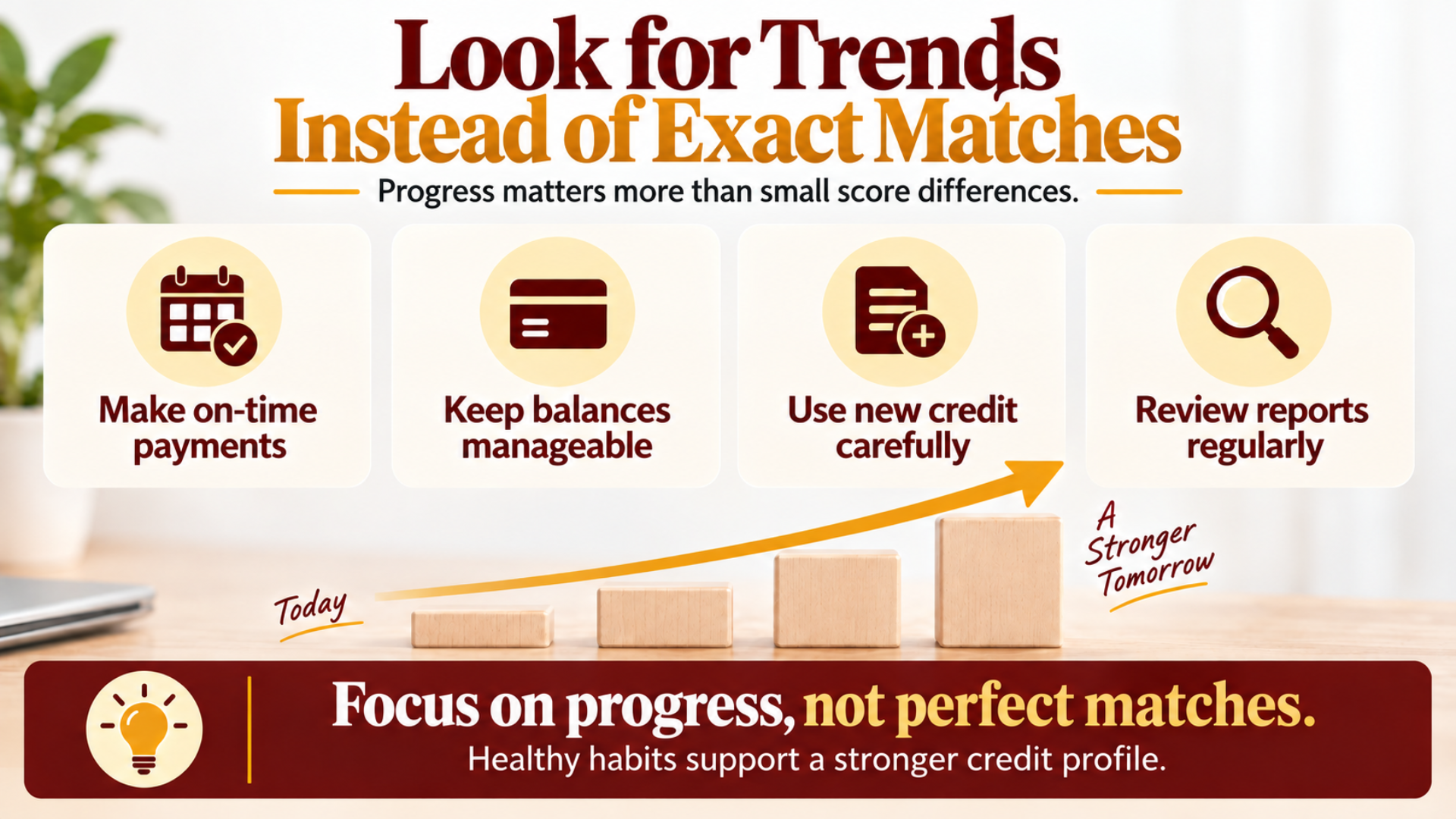
Look for Trends Instead of Exact Matches
If one credit service shows 705 and another shows 720, the difference may be less important than whether both scores are generally improving or declining.
Credit monitoring is most useful when it helps you notice patterns.
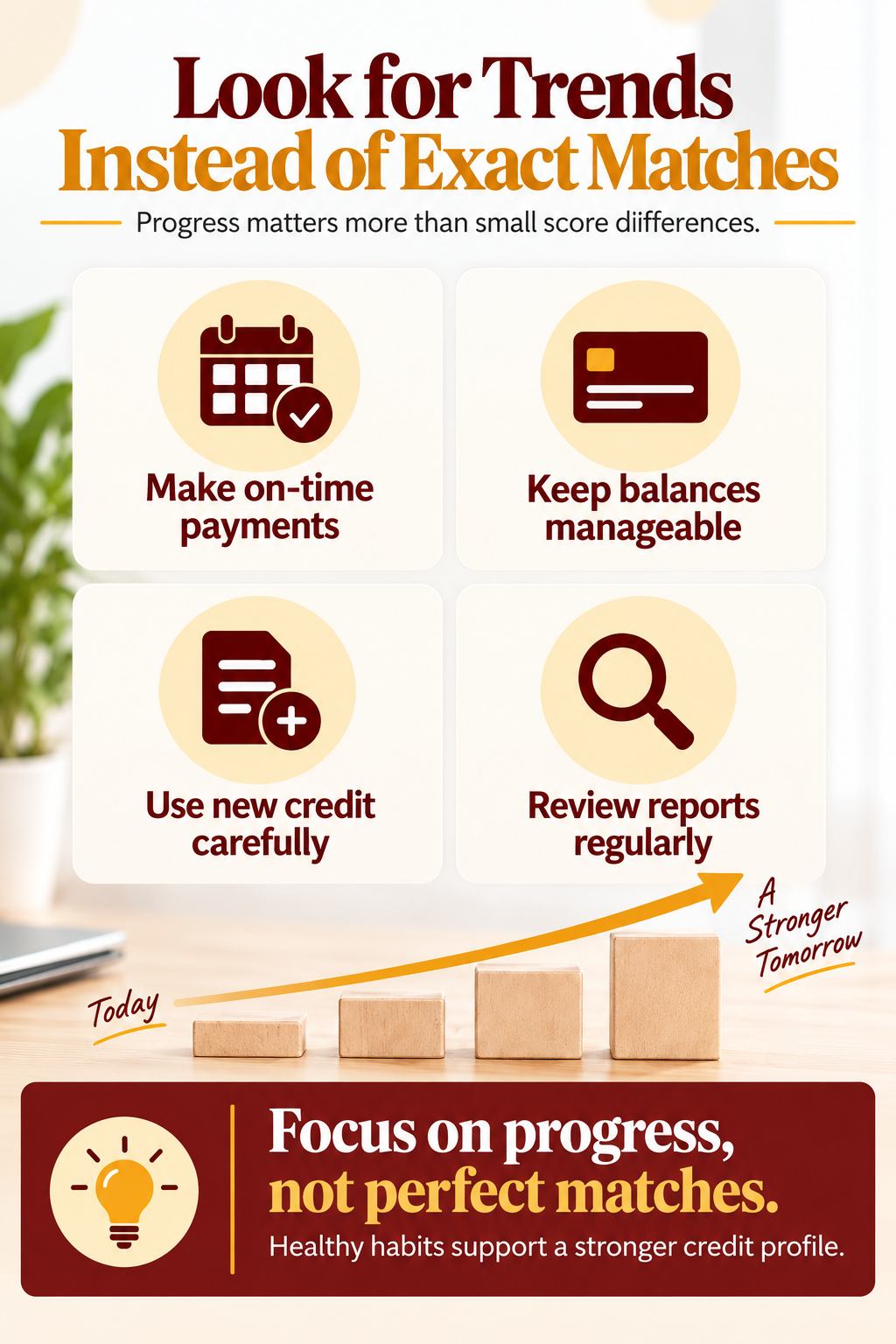
Consistent on-time payments, manageable balances, careful use of new credit, and regular report reviews can support a healthier credit profile.
Use Credit Scores as One Financial Tool
A credit score can provide useful information, but it is not a complete measure of financial health.
Savings, income stability, debt load, monthly cash flow, and emergency preparedness matter too.
Portside Finance encourages consumers to understand how credit works rather than focusing on a single number.
If your scores differ across apps or lenders, do not assume something is automatically wrong. Review which scoring model, bureau, and date are being used, then focus on the financial habits and report information that influence all of them over time.